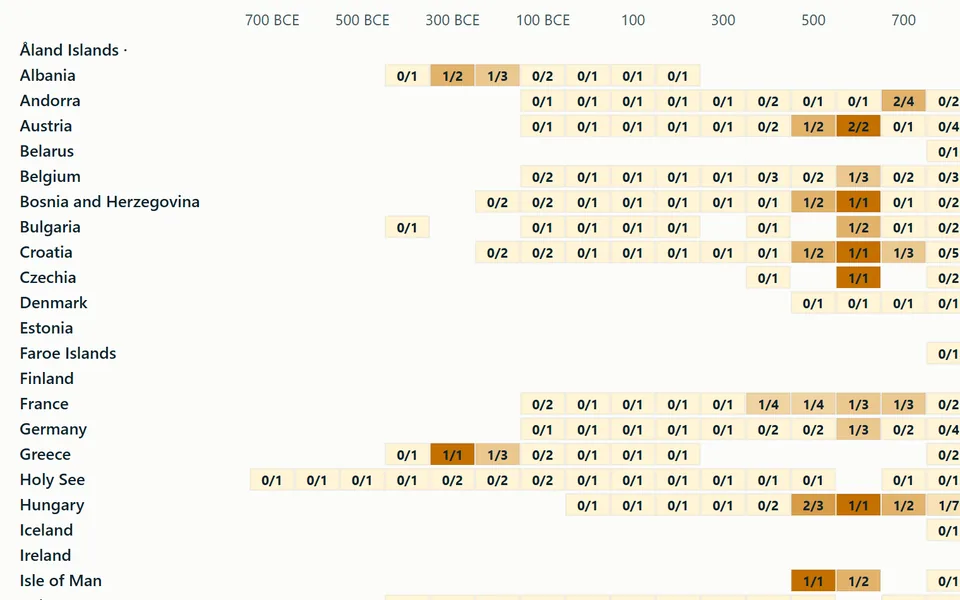
 Where land was held and nobody writesSilence atlasPick a present-day country and see, century by century, which polities held its land and how many works name each. The quiet stretches are opportunities, not findings of no research.
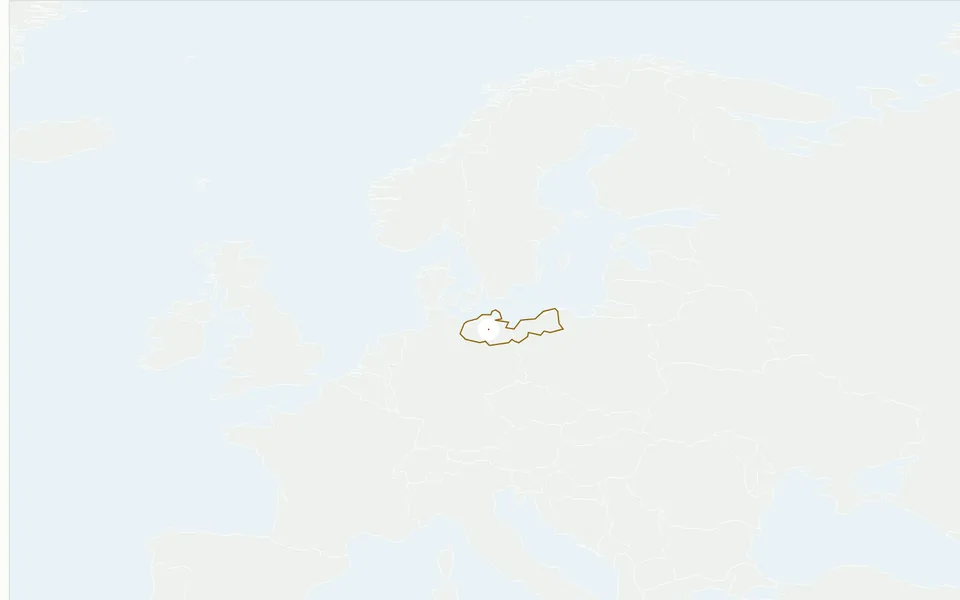 Who held this place in that year?Pin in timeClick anywhere on the map and choose a year: ARCHE returns the polities of the catalogue whose outline contained that point, and what is written about them.
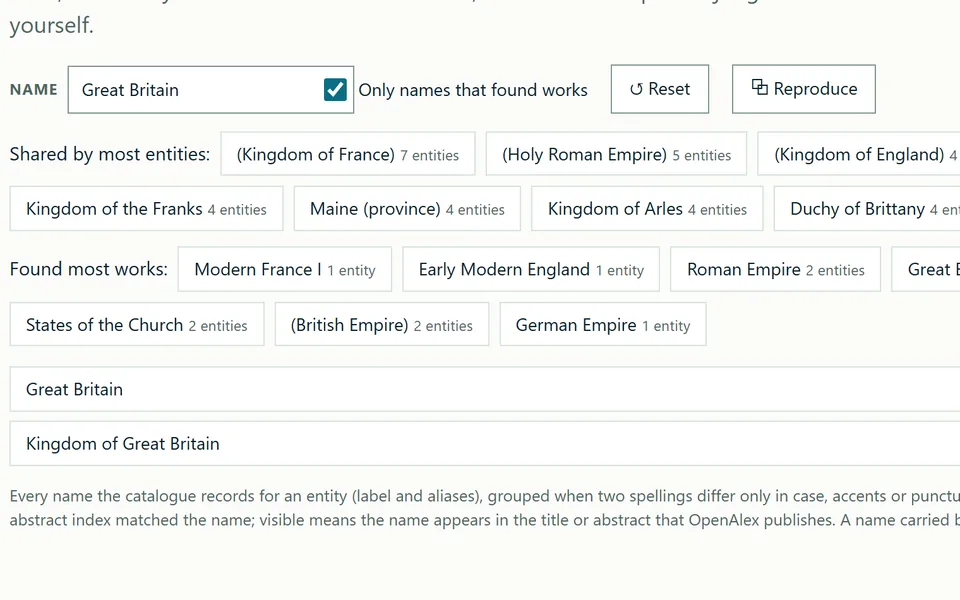 What does a name really find?Name detectiveType a name such as Great Britain and see which entities carry it, how many works it finds, how many show it in the title or abstract, and a few examples to judge for yourself.
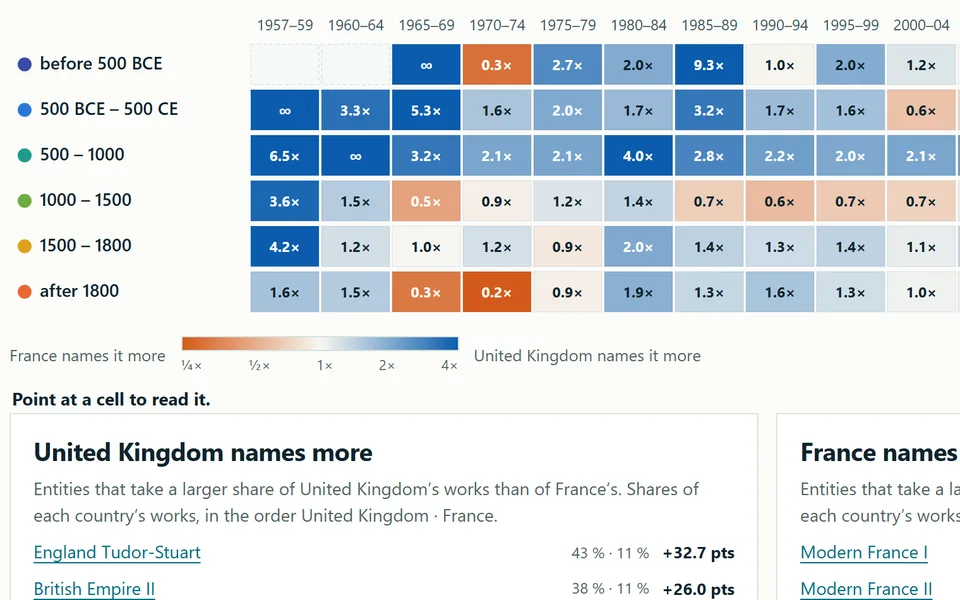 What one country names that another does notMirrorTwo countries, one picture: the difference between their fingerprints over the past and over publication years, per History work.
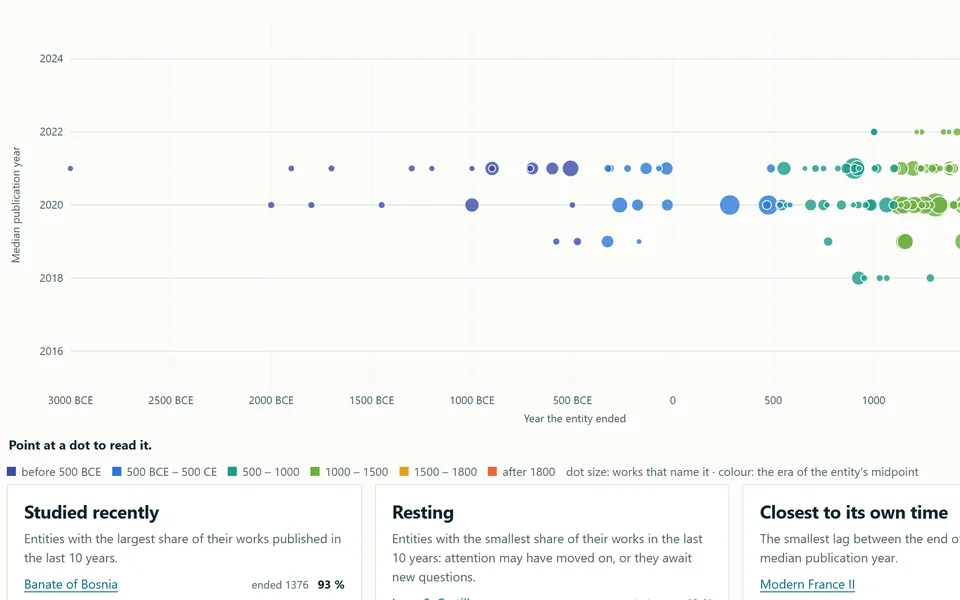 How long after a polity ended is it written about?Memory lagEvery entity placed by the year it ended and the median year of the works that name it: waves of memory, entities studied recently and entities that rest.
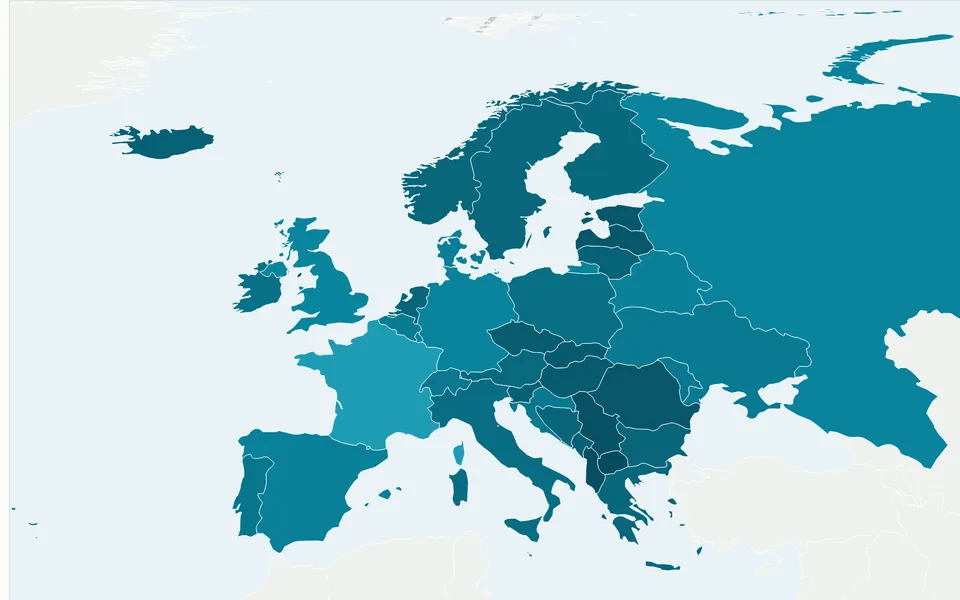 When did each country start to write about the past?Publication tidePress play and watch the countries light up by the year their works were published: matches, or matches per 1,000 History works so that indexing growth does not decide the picture.
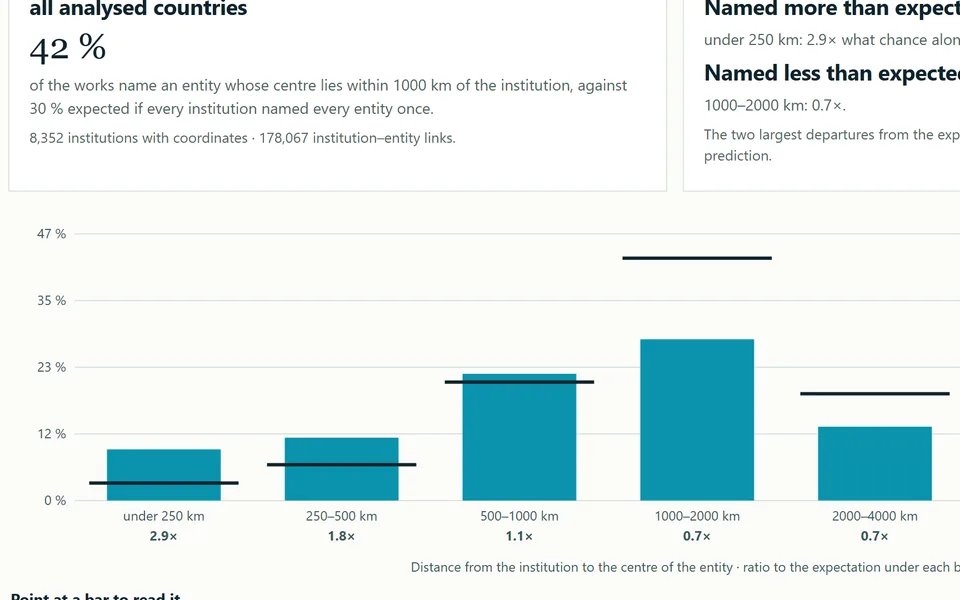 Do institutions name the past that lay near them?Does distance matter?The distance between an institution and the centre of each historical entity it names, against what the distances would be if every entity were named once.
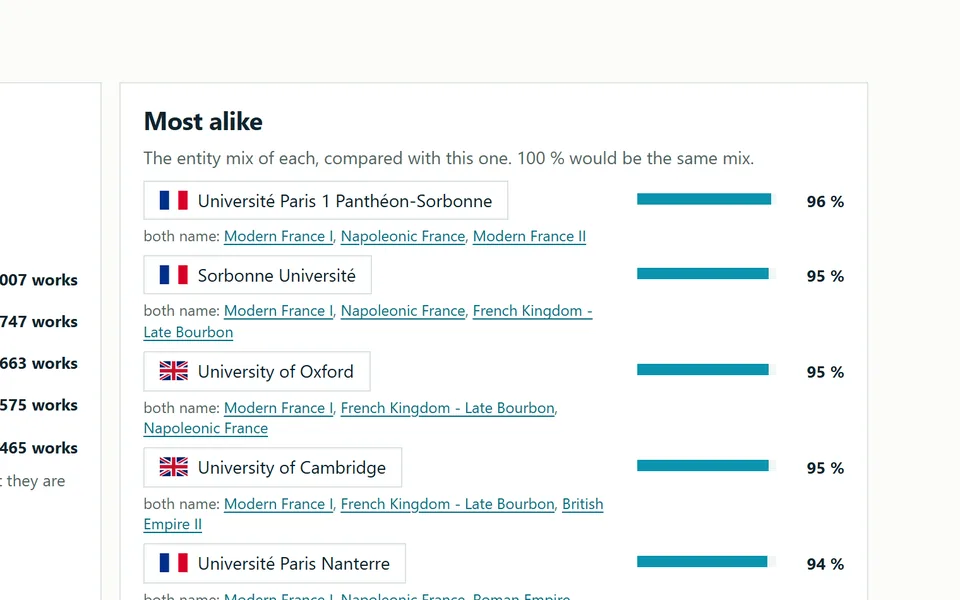 Which institutions study the past in the same way?Institutions alikePick an institution and see the ones whose entity mix is most alike, and the entities they share most. Alike is not cooperating.
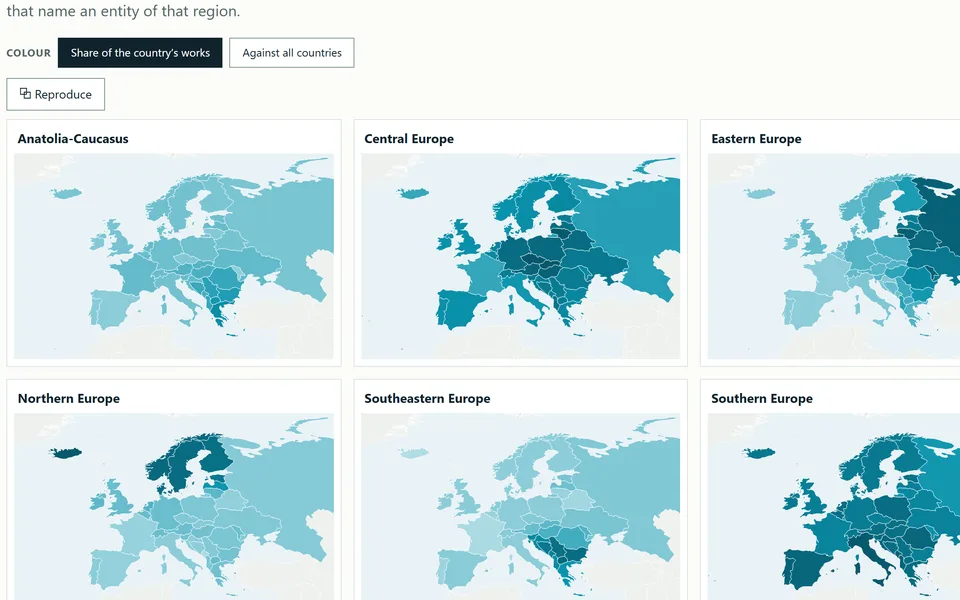 Which countries look at which region of the past?Seven regions, seven mapsOne small map for each Seshat region of the past: the share of each country’s works that name an entity of that region.
The pictures are screenshots of each tool on the published data: the tool shows more, and you can change what it shows.