01 · Who studies what
From an institution to the names it studies.
Choose an institution, inspect its linked historical entities, then follow a candidate work. Map lines join source coordinates; they are not research journeys.
Not analysed: no country-specific research partition is loaded.
Territories show each entity’s widest recorded Cliopatria extent, not the place a work was written or a selected historical year. Explore historical time ↓
How to read this map · sources and limitations
A line joins an institution’s recorded main site to an entity’s approximate centre of widest recorded extent. It is neither a research journey nor a reviewed finding. It also does not say when the linked works were published.
Present-day reference map: OpenFreeMap vector tiles, derived from OpenStreetMap and OpenMapTiles. Last checked when this release was generated: 29 Oct 2026; live contextual cartography, not an ARCHE dataset or evidence layer. This map is drawn in Web Mercator because the base map is: areas toward the north look larger than in the Equal Earth maps of the Atlas and Explore. OpenStreetMap data are ODbL; visible attribution is retained here.
02 · What and when
Which entities are studied, and when?
- Select an entity (a row, or its name in the table) to see its own publication trace and which institutions study it.
- The bars above the columns count the country's unique candidate works per period; after you select an entity they show that entity only. The bars on the right are each entity's total.
- One work can match several entities, so rows must not be added to obtain the overall number of works.
- An empty cell means no candidate work was found, which is unknown rather than zero research; faded bars have fewer than five works and are not a trend.
- The coloured dot at the start of a row marks the era in which the entity existed; historical dates and descriptions are in the Entities explorer.
- Keyboard: Tab to the chart, up and down arrows move between entities, Enter selects, Escape clears. The Table button shows the same numbers as a table.
How to read this publication view · sources and limitations
Each row is a historical entity and each column a publication period; cell colour encodes candidate works. A work can occur in more than one entity row.
03 · Who held this land
Which historical polities covered today’s Jersey?
Not analysed yet: no catalogue territory is published for Jersey. Unknown is not zero.
04 · How it compares
What does Jersey look at, compared with the other countries?
Not analysed yet: this comparison needs the works of Jersey. Unknown, not zero.
How to read this comparison · sources and limitations
Rates are candidate works per published country corpus, not a ranking of national expertise or historical interest. Country means OpenAlex institutional affiliation. Different retrieval dates and query modes can make country comparisons non-equivalent.
05 · Who and with whom
Who carries the work, and who is it like?
Not analysed yet. Unknown, not zero.
How to read institutions and patterns · sources and limitations
Institution names and locations are OpenAlex affiliation records. They do not establish author nationality, where research happened, or institutional expertise. A work can have multiple institutions and match multiple entity names, so link counts are not additive.
06 · Limits of visibility
What this retrieval can—and cannot—make visible.
Not analysed yet. Unknown, not zero.
How to read these limits · sources and limitations
A missing name match does not establish missing scholarship. The territory lens depends on recorded Cliopatria geometry; language and subject labels depend on OpenAlex metadata; open-access status is OpenAlex’s computed field. Each lens describes a limitation of retrieval visibility.
07 · Where to start reading
Which works can you open and check yourself?
Not analysed yet. Unknown, not zero.
How to read these entry points · sources and limitations
These works are selected to make a candidate match easier to inspect, not to rank scholarship or represent the full corpus. A visible name in a title or abstract still requires contextual review before it can be treated as research about an entity.
08 · The works
Read the works behind the numbers
Works from Jersey’s institutions that mention a historical entity by name.
No country-specific corpus is published. Unknown is not zero.
| Work | Entity | Institution | Name found in |
|---|
How to read this, sources and limits
The list is the complete saved set, not a sample. Every link between a work and an entity is a candidate: nobody has checked it by hand, and a match on a name does not prove the work studies that entity. When OpenAlex finds the name in text that is not the title or abstract, it is shown as “Not shown”, never invented. Open a work to see the matching term, where it was found and the sources.
09 · Sources and method
Sources, dates, licences and method
Sources, dates, licences and method
No country-specific research query or dataset is published for this profile. Its research visualisations and result fields therefore remain empty; this is not evidence of zero research.
A retired pilot retrieval is a separate query cohort and is not substituted into these views.
Place registry: UNSD M49, local snapshot generated 2026-09-14. Place metadata and research evidence are separate datasets.
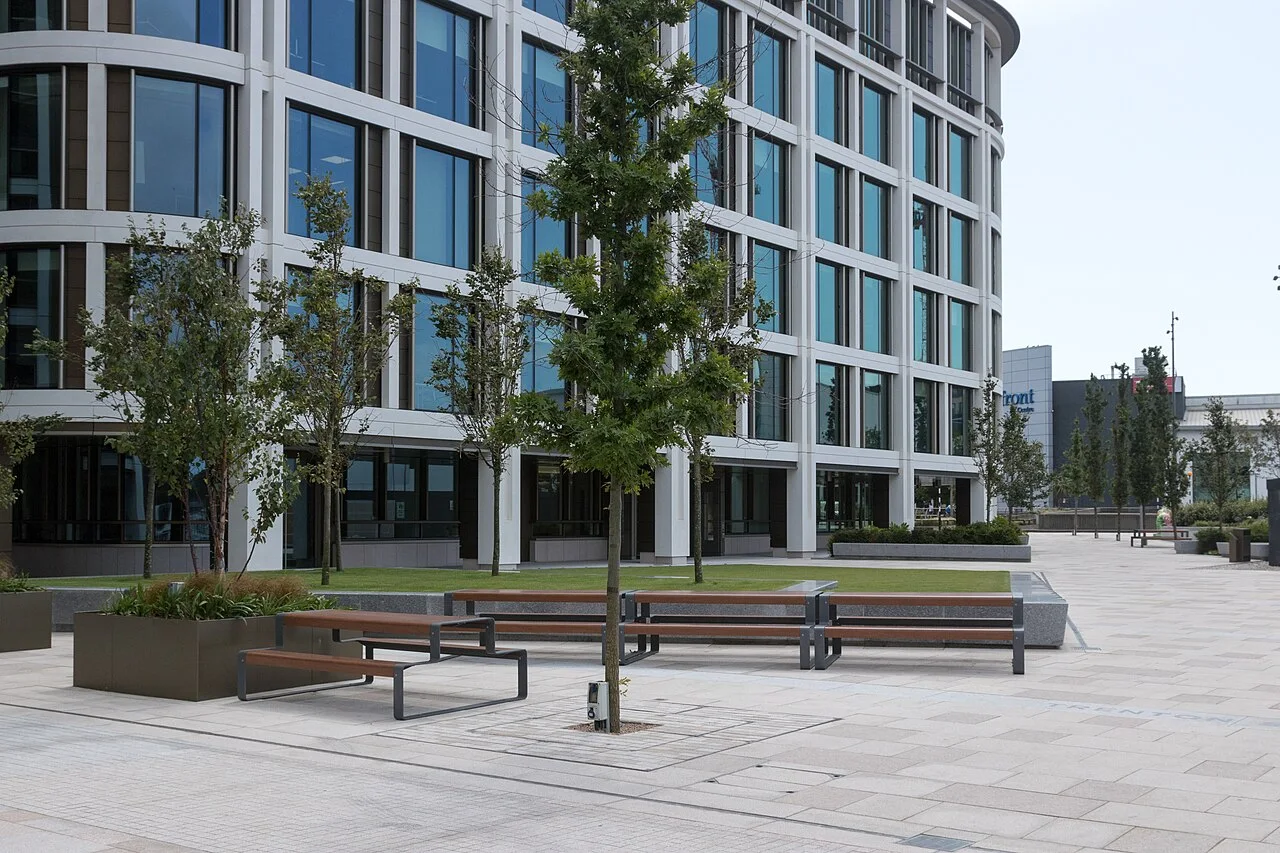
Representative image
Image: Trenton Square, St Helier, Jersey.jpg · Danrok / Wikimedia Commons · CC BY-SA 4.0
Representative place image approved in the local ARCHE backoffice. It is not evidence about the cultures studied. Retrieved 2026-10-13T18:48:13+00:00.
How to read this page. Country means the institutional affiliation recorded in OpenAlex, not author nationality, research location or historical territory. A lexical or topic match is a retrieval signal, not validated research attention.